


















PHILOSOPHY
Latest
Ismet Sahin: Thought and Philosophy
Ismet Sahin: Thought and Philosophy Explore the radical philosophy of Ismet Şahin, a thinker, author, publisher, and activist. Influenced by Aristotle, Hegel, and Marx, Şahin critiques traditional ideologies, advocating for open-ended systems in politics, society, and knowledge. His journey from Marxist theory to a more critical perspective on societal transformation reflects his evolving vision for social justice and philosophical evolution. Learn more about his thought and philosophical contributions.
ESSAYS
Latest
On the Influence of Aristotle on Marx
To the uninitiated, the connection between Marx’s theoretical framework and the ideas of a...




PHILOSOPHY
Latest
Ismet Sahin: Thought and Philosophy
Ismet Sahin: Thought and Philosophy Explore the radical philosophy of Ismet Şahin, a thinker, author, publisher, and activist. Influenced by Aristotle, Hegel, and Marx, Şahin critiques traditional ideologies, advocating for open-ended systems in politics, society, and knowledge. His journey from Marxist theory to a more critical perspective on societal transformation reflects his evolving vision for social justice and philosophical evolution. Learn more about his thought and philosophical contributions.
ESSAYS
Latest
Rethinking the Turkish Hearths, Rethinking Turkism
Rethinking the Turkish Hearths, Rethinking Turkism A Study of Customary Being, National Identity, and the Geopolitical Unity of the Turkic World AbstractThis study conceptualizes Turkism not as ethnic closure in a narrow sense, biological essentialism, or romantic cultural nostalgia, but as an ontological, customary, and political principle of being directed toward the preservation of the historical subject. Its central proposition is this: the contemporary global order generates a regime of indeterminization that erodes not only the borders of states, but also nations’ capacity to name themselves, their historical memory, and their status as constitutive subjects. In the case of the Turkish nation, this process appears as the amorphization of the constitutive historical subject under such discourses as “multiculturalism,” “superordinate identity,” and “plurality.” Within this framework, the Turkish Hearths are approached not merely as a historical society, but as a site for the reorganization of customary memory, constitutive reason, and national continuity. The study further argues that while European integration is legitimized as a progressive historical form, the horizon of unity in the Turkic world is often stigmatized as reactionary, and treats this as an ideological double standard. It also examines the effects of contemporary imperial aggression on Eurasia within the context of the hegemonic phases of historical capitalism. In conclusion, it argues that the geopolitical unity of the Turkic peoples is not a romantic ideal, but directly a matter of historical being. The official institutional history of the Turkish Hearths clearly states that the organization was formally founded on 25 March 1912 and that preparations had begun in 1911.

REVIEWS
Latest
Escaping Class: A Philosophical Critique of Marxism by İsmet Şahin – An Advanced Scientific Critique
This article provides an advanced, in-depth scholarly analysis of Escaping Class: A Philosophical Critique of Marxism, authored by İsmet Şahin. The book critically re-evaluates Karl Marx’s ideas, post-Marxist traditions, and the interplay of class, politics, and individual freedom. Şahin contends that mainstream Marxism often overshadows the question of personal liberty, focusing instead on collectivist visions and deferred promises of liberation.
- PHILOSOPHY
- REVIEWS
- ESSAYS
- ULTRA TRAIL
- SHOP
- COURSE
Ismet Sahin: Thought and Philosophy
Ismet Sahin: Thought and Philosophy Explore the radical philosophy of Ismet Şahin, a thinker, author, publisher, and activist. Influenced by Aristotle, Hegel, and Marx, Şahin critiques traditional ideologies, advocating for open-ended systems in politics, society, and knowledge. His journey from Marxist theory to a more critical perspective on societal transformation reflects his evolving vision for social justice and philosophical evolution. Learn more about his thought and philosophical contributions.
Escaping Class: A Philosophical Critique of Marxism by İsmet Şahin – An Advanced Scientific Critique
This article provides an advanced, in-depth scholarly analysis of Escaping Class: A Philosophical Critique of Marxism, authored by İsmet Şahin. The book critically re-evaluates Karl Marx’s ideas, post-Marxist traditions, and the interplay of class, politics, and individual freedom. Şahin contends that mainstream Marxism often overshadows the question of personal liberty, focusing instead on collectivist visions and deferred promises of liberation.
Rethinking the Turkish Hearths, Rethinking Turkism
Rethinking the Turkish Hearths, Rethinking Turkism A Study of Customary Being, National Identity, and the Geopolitical Unity of the Turkic World AbstractThis study conceptualizes Turkism not as ethnic closure in a narrow sense, biological essentialism, or romantic cultural nostalgia, but as an ontological, customary, and political principle of being directed toward the preservation of the historical subject. Its central proposition is this: the contemporary global order generates a regime of indeterminization that erodes not only the borders of states, but also nations’ capacity to name themselves, their historical memory, and their status as constitutive subjects. In the case of the Turkish nation, this process appears as the amorphization of the constitutive historical subject under such discourses as “multiculturalism,” “superordinate identity,” and “plurality.” Within this framework, the Turkish Hearths are approached not merely as a historical society, but as a site for the reorganization of customary memory, constitutive reason, and national continuity. The study further argues that while European integration is legitimized as a progressive historical form, the horizon of unity in the Turkic world is often stigmatized as reactionary, and treats this as an ideological double standard. It also examines the effects of contemporary imperial aggression on Eurasia within the context of the hegemonic phases of historical capitalism. In conclusion, it argues that the geopolitical unity of the Turkic peoples is not a romantic ideal, but directly a matter of historical being. The official institutional history of the Turkish Hearths clearly states that the organization was formally founded on 25 March 1912 and that preparations had begun in 1911.

The Best Treadmill Training for an Ultra-Marathon
What's the best treadmill training for an ultra-marathon? Learn the best treadmill training for an ultra-marathon with expert tips and strategies to enhance your endurance and performance in ultra-race preparation.

E-SHOP
Sale! ANTİ KAPİTALİST MANİFESTO (Türkçe) ₺60,00 Original price was:...
Sorry, No Posts Found
RECENT POST




Products
-
 QUANTUM FİLOZOFİ - KAPALI TÜM YOKTUR (Türkçe)
Original price was: ₺60,00.₺45,00Current price is: ₺45,00.
QUANTUM FİLOZOFİ - KAPALI TÜM YOKTUR (Türkçe)
Original price was: ₺60,00.₺45,00Current price is: ₺45,00. -
ANTİ KAPİTALİST MANİFESTO (Türkçe)
Original price was: ₺60,00.₺45,00Current price is: ₺45,00.
-
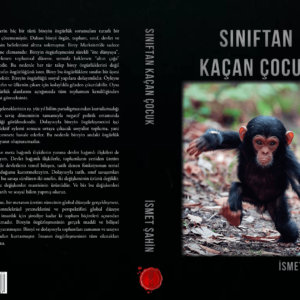
SINIFTAN KAÇAN ÇOCUK (Türkçe)
Original price was: ₺60,00.₺45,00Current price is: ₺45,00.
-
Quantum Philosophy - There Is No Closed Whole
Original price was: ₺150,00.₺110,00Current price is: ₺110,00.





RECENT COMMENTS